

Our Phonics Scheme - Supersonic Phonic Friends
At Cromer Road school we follow Supersonic Phonic Friends, a systematic, synthetic phonics programme designed to ensure every child becomes a confident, fluent reader and writer. The programme is fun, engaging and character-led, helping children make strong, meaningful connections with sounds through carefully planned lessons, actions and routines.
Aim of the Scheme: The aim of the Supersonic Phonic Friends programme is to teach children to read and write by developing their phonics knowledge and skills through an engaging, systematic, synthetic phonics approach.
Children learn to:
- Recognise phonemes (sounds)
- Link them to graphemes (letters or groups of letters)
- Blend sounds to read words
- Segment sounds to spell words
As children move through the programme, they rapidly build a secure understanding of the alphabetic code, enabling them to apply their phonics skills independently across the curriculum. A love of reading is prioritised, with a focus on developing fluency, confidence, and expression.
Phonics in Reception (EYFS)
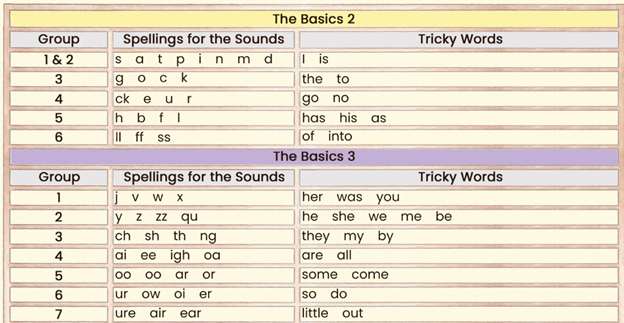
Reception children follow The Basics 2 and The Basics 3.
What learning looks like:
- Daily phonics sessions
- Introduction to single letter sounds before digraphs (two letters, one sound) and trigraphs (three letters, one sound)
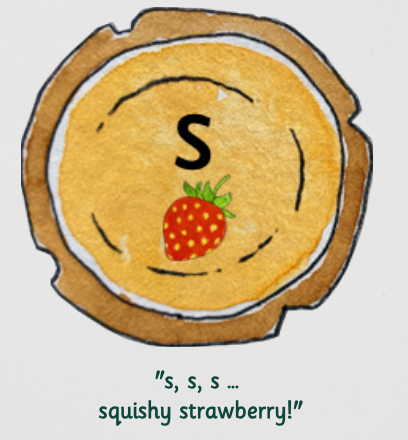
- Each sound is taught with an accompanying picture and action (e.g., “squishy squishy strawberry” for s)
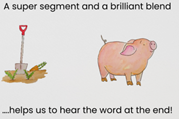
- Strong focus on orally blending and segmenting, rhythm, and rhyme
- Continual recap and review to secure retention
- Regular opportunities for reading 1:1, in groups and whole class
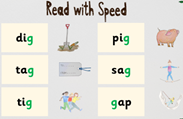
Children begin by matching phonemes to graphemes, then progress to reading and writing CVC words (e.g., cat, pin, pop). As confidence grows, children are introduced to digraphs and trigraphs, gradually building towards all 44 phonemes and one way to represent each sound by the end of the year.
Phonics in Year 1
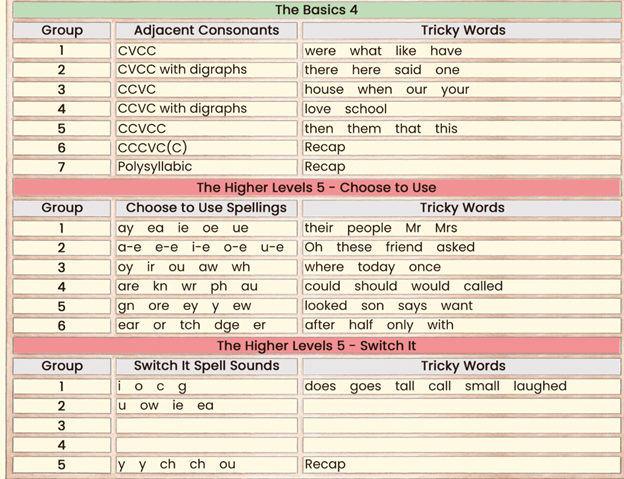
Year 1 children continue into The Basics 4 and Higher Levels 5, where learning becomes more complex.
Key focus:
- Daily phonics teaching
- Reading and spelling words with adjacent consonants (CVCC and CCVC), such as blink, think, coast
- Becoming fluent with alternative spellings for previously learned sounds
- Exploring more than 100 spellings that represent the 44 phonemes
- Prioritising fluency, speed, and spelling application
Key characters:
- Switch-it Mitch – helps children switch sounds to identify alternative pronunciations
- Choose to Use Suze – supports choosing the correct spelling for a sound
- Tricky Tess – teaches tricky words that cannot be decoded
- Nonsense Nan – prepares children for decoding real and alien words for the Year 1 Phonics Screening Check
By the end of Year 1, children confidently recognise alternative spellings and sound patterns, enabling them to apply their phonics skills across all reading and writing.
Phonics in Year 2 and Key Stage 2 (where needed)
From Year 2 onwards, the focus shifts from decoding to broader spelling knowledge and fluency.
What learning includes:
- Revisiting key phonics content to ensure security
- Applying spelling rules, including suffixes and homophones
- Learning and practising common exception words
- Continued use of Supersonic Phonic Friends characters and routines
- Targeted interventions for children who require additional decoding support
Supersonic Phonic Friends provides a tailored spelling programme for both Year 1 and Year 2, ensuring progression and continuity.
https://www.supersonicphonicfriends.co.uk/ Lesson Example
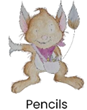
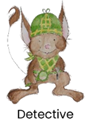
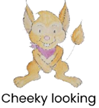
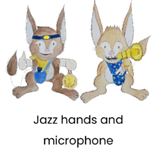
Meet our Phonics Friends - Who’s Who?
|
Character |
Role Explained |
What They Say/Do |
|
Listening Len
|
Helps us hear sounds in words |
"Listen with Len!" |
|
See it Sam
|
Shows us the spelling for each sound |
"Let's see it with Sam!" |
|
Segmenting Seb
|
Chops words into individual sounds |
"Segment with Seb!" |
|
Blending Ben
|
Blends sounds back together |
"Blend with Ben!" |
|
Building Bill
|
Builds words using spellings |
"Build with Bill!" |
|
Reading Rex
|
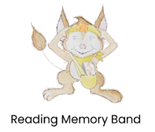
Helps us read words and use reading memory |
"Read with Rex!" |
|
Writing Ron
|
Helps us write using correct spellings |
"Write with Ron!" |
|
Tricky Tess
|
Spots tricky parts in words that can’t be sounded out easily |
"It's Tricky Tess time!" |
|
Nonsense Nan
|
Reads nonsense (alien) words |
"It's absolute nonsense!" |
|
Cheeky Sneaky Sid
|
Adds fun, surprises and helps us look ahead |
"Very sneaky and very cheeky!" |
|
Jack & Magic Mack
|
Help with adjacent consonants and polysyllabic words |
"Say it a little bit longer!" |
|
Choose to Use Suze
|
Helps choose the correct spelling for the same sound |
"It sounds the same but looks different!" |
|
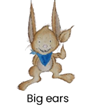
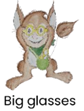
Switch it Mitch
|
Shows us graphemes that look the same but sound different |
"They're switch-it spell sounds!" |

Reading at Home
At Cromer Road, we believe that regular reading at home plays a vital role in helping children become confident, fluent, and enthusiastic readers. To support this, children across the school will bring home books matched to their reading stage, along with opportunities to choose books for enjoyment.
Reception and Key Stage 1 (KS1)
Each week, children will bring home a banded reading book that matches our phonics progression. These books are carefully selected to include:
- Decodable words that children can read using the phonics sounds they have been taught
- High-frequency words they are learning in class
These books should be read at home to help build children’s fluency, confidence, and decoding skills. Re-reading the same book is encouraged, as it supports accuracy and improves reading pace.
To ensure success, children take home fully decodable books matched to their phonics level. We encourage children to regularly read their book, focusing on:
- Decode - Sounding out and blending to read the words.
- Fluency - Reading more smoothly, confidently and at a natural pace.
- Expression - Reading with meaning, character and intonation.
Parents can support by using pure sounds (e.g., ssss, mmm, t) and celebrating progress, no matter how small.
Key Stage 2 (KS2)
Children in KS2 will also bring home banded levelled books that match their current reading ability. These books are designed to challenge and extend their comprehension, vocabulary, and fluency.
In addition, each class visits the school library once a fortnight, where children can choose a library book to borrow and take home. Library books are for enjoyment and may be read independently or shared with an adult.
How You Can Support Reading at Home
- Listen to your child read regularly—little and often works best.
- Talk about the book together: discuss characters, events, new words, and favourite parts.
- Celebrate their effort and progress to build confidence.
- Make a quick note in the reading record to let us know how they are getting on.